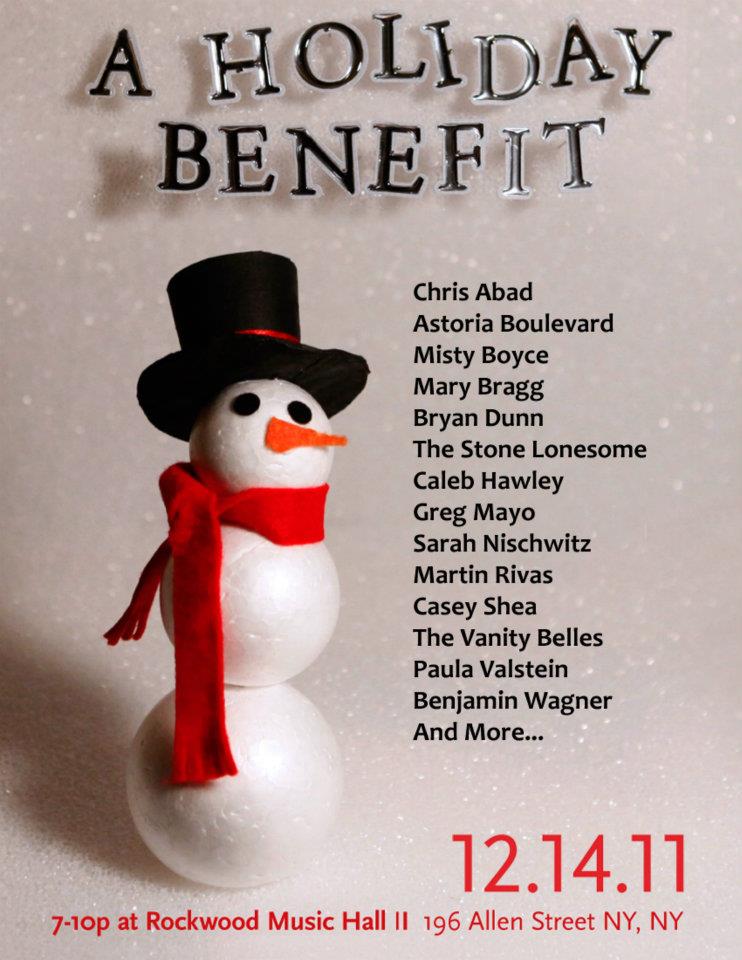
For the past five years, New York musicians have joined forces to produce a holiday album for a good cause.
Each year, A Holiday Benefit is recorded and released by local talent. All proceeds donated to 826NYC, a nonprofit organization dedicated to supporting students ages 6-18 with their creative and expository writing skills.
The fifth and final benefit show will be held on Wednesday at Rockwood Music Hall Stage II.
Singer-songwriter Benjamin Wagner explained his idea for the yearly event was inspired by the 1984 Band Aid song, “Do They Know It’s Christmas?” Featuring Sting, Bono, Duran Duran, Paul Young and numerous other musicians, the track raised money for famine relief in Ethiopia.
“It’s not the greatest song on the planet, but at the time no one had ever done that before,” he said.
For my complete article, visit CBS. Watch the group’s video for “Do They Know It’s Christmas” below.
Last summer, I chatted with Amber Rubarth after her intimate show at Rockwood Music Hall. A beloved musician to many, she has collaborated with numerous artists including Jason Mraz and Martie Maguire and Emily Robison of the Dixie Chicks and Court Yard Hounds, not to mention toured the California coast on a vespa with Jason Reeves.
During our interview, Rubarth filled me in on her journey to following her passion, something her boss engrained in her while she was an apprentice to a chainsaw sculptor in Nevada, her songwriting process and the inspiration by some of her songs.
To find out more, watch the video below and be sure to purchase a copy of her latest album, A Common Case of Disappearing, which features collaborations with Jacquire King, Brad Bivens, Adam Levy, Frank Swart, Marco Giovino, Oliver Kraus, Zac Rae, Jason Reeves and Jason Mraz. Catch Amber Rubarth live tonight at Rockwood Music Hall Stage 2.
Long before he was part of popular country trio Lady Antebellum, Dave Haywood acted as engineer and producer for his friend, Mary Bragg. The two met in high school and started singing together their first week of college.
With adjacent dorm rooms at the University of Georgia, Haywood and Bragg formed a band and even opened for a still-unknown Miranda Lambert. After Bragg graduated, Haywood and the now-Brooklyn-based Americana songstress began working on her debut record, “Certain Simple Things,” in the fall of 2003.
“He was really the first person to push me to write songs. We were in a band together for three years and he’s like, ‘We’re gonna make a record,'” she recalls. “He said, ‘I’m going to send you these MP3s of me playing these random chords and I want you to write some lyrics and melodies.'”
Finding the perfect song to fit a poignant scene in a film can often take months to a year to select. With the right placement, the entire mood of a movie can shift, making all that hard work pay off.
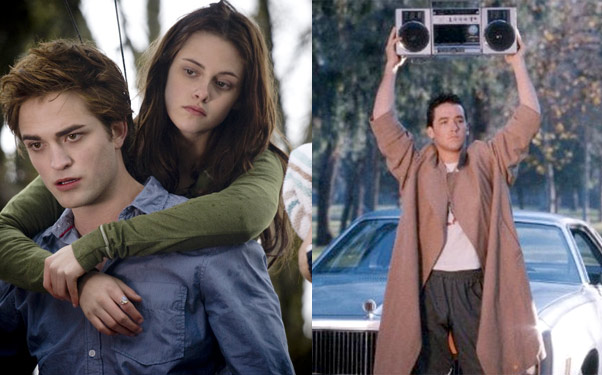
Remember Rocky’s warm-up routine to “Gonna Fly Now” and that pinnacle stair scene? How about when John Cusack’s character in “Say Anything” held up his boombox blasting Peter Gabriel’s “In Your Eyes”? These scenes are easily distinguished as landmark moments in Hollywood and it’s impossible to imagine any other song being played.
I chatted with music supervisor Alexandra Patsavas, known for her work in the “Twilight” series, to find out just how she selects the perfect track for each scene and the steps she takes from start to finish.
“Once a music supervisor gets hired, we sit down with the director and talk about the musical feel and vibe of the songs and the movie. That starts the musical conversation that might include CDs going back and forth or listening to tracks together,” Patsavas said. “Sometimes we start pitching tracks while the movie is being shot. And, of course once the movie is assembled and edited a supervisor pitches songs to picture.”
Mary Bragg has been winning over audiences in the New York singer-songwriter community for years.
With three albums under her belt, the Georgia native said the first time she visited New York as a teen it was love at first sight.
“When I was in New York, I felt this incredible sense of energy and thought and challenging circumstances,” she said. “I knew in order for me to have fodder for songwriting I needed to not live so wonderfully. I actually moved to New York both wanting to experience the world more and to find hardship.”
Bragg began writing songs in college thanks to the urging of her friend Dave Haywood. Now one third of popular country trio Lady Antebellum, Haywood engineered and produced Bragg’s debut album.
“I think in theory I knew that I could be a songwriter, it’s just that I had never actually sat down and done it,” Bragg recalled. “He was the person that said, ‘Alright, next Monday you’re going to come over and you’re going to have some stuff to sing for me.’”
For the complete article, visit CBS. Be sure to catch Mary Bragg tonight at Rockwood Music Hall Stage 1.
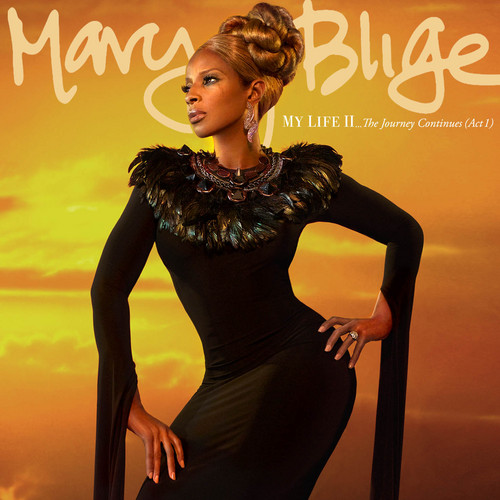
It’s no secret Mary J. Blige portrays her life, good and bad, in her songs.
“When life is real it’s not going to be smooth,” the Queen of Hip-Hop/Soul said onstage at the New York Time’s Times Talks event on Monday (Nov. 28) in NYC. “I was just singing from my life, singing through my experiences, singing through the hurt and the pain in order to survive,” Blige said.
Blige finds it important to relate to her music, she told New York Times music critic Jon Pareles during the onstage interview.
“It has to be relative to the audience and you have to have dealt with something,” she said. “I can’t just make a song people can dance in a club to… it still has to be real.”
Last month, I met fellow music journalist Markos Papadatos while covering Martina McBride’s performance at the Empire State Building. This weekend, Papadatos was kind enough to interview me for Suite101.
We chatted about my beginnings as a writer, You Sing I Write, some of my favorite interviews (which include Switchfoot’s Jon Foreman as seen above) and being one of six music bloggers nominated to cover a red carpet event honoring Paul McCartney during the Grammy’s. Below is an excerpt from his article.
“Annie Reuter is one of New York’s most accomplished, dedicated and passionate music and entertainment journalists. Reuter’s articles and feature interview profiles with some of the biggest names in pop and country music have appeared in such prestigious outlets as Billboard‘s official website, Rolling Stone, Marie Claire’s website, AOL’s The Boot, CBS, MTV, among many others; moreover, she is the founder of her successful music blog, ‘You Sing, I Write.'”
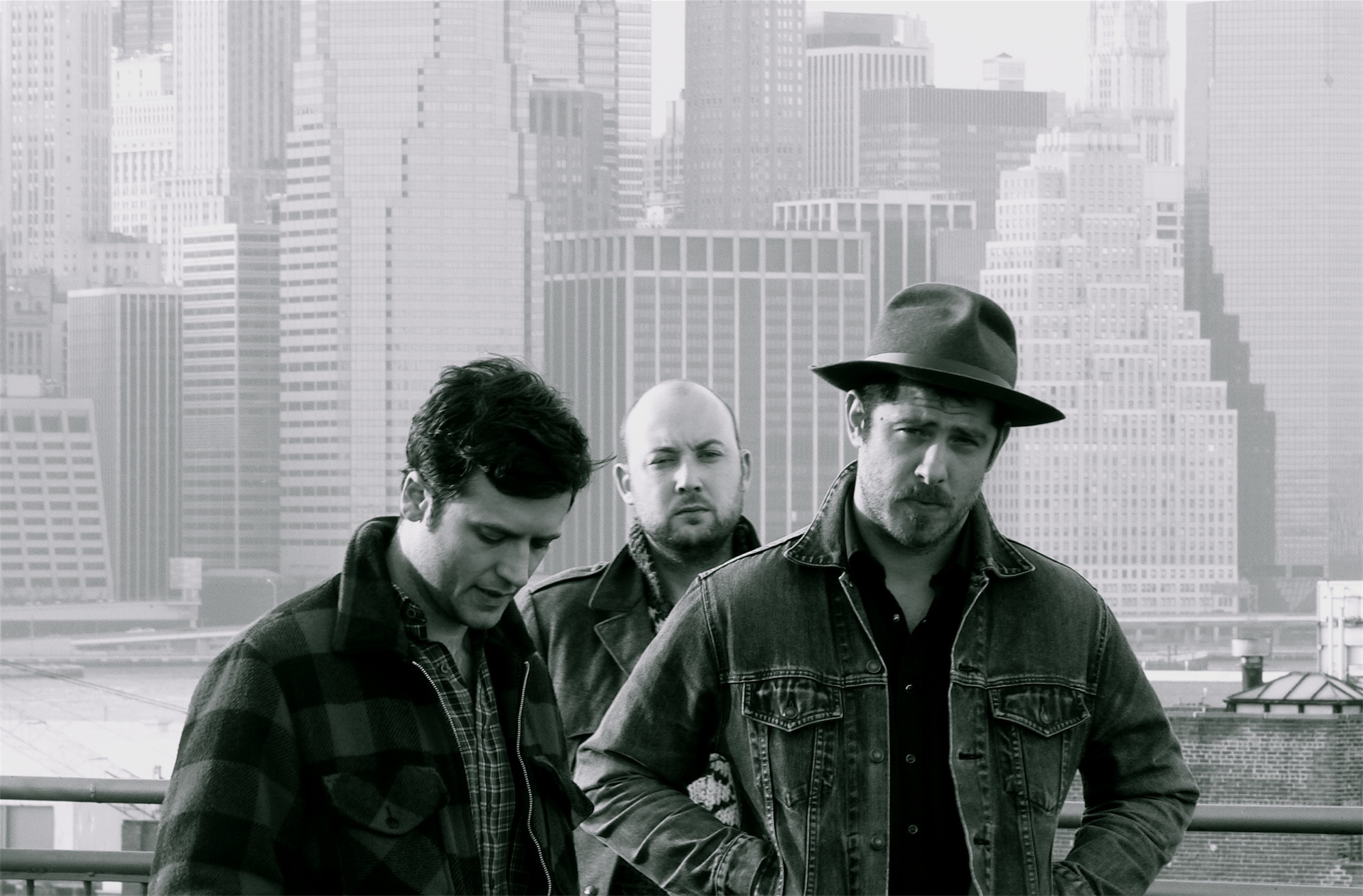
Earlier this month, We Are Augustines captivated a sold-out crowd at Bowery Ballroom. Their second of four performances at this year’s CMJ Music Marathon, they had festival-goers screaming along song after song. While tracks like the poignant “Chapel Song” captivated with emotive lyrics, others like the bass heavy “Headlong Into the Abyss” stood out with sweeping guitar and horn features.
After having their album on repeat for days, I chatted with frontman Billy McCarthy about his songwriting process, the band and what it’s like playing live. Formed after the demise of former band, Pela, McCarthy explained the start of Brooklyn-based We Are Augustines.
“I think we had an abbreviated run with our last band and we felt like there was so much more to say so it was worth our time to refocus our lives to do it,” McCarthy said.
McCarthy writes candidly about his life within his music, something he likens to running down the street screaming your journal to rooms full of people.
“Honestly, it’s not always easy to talk about stuff in the literal sense and have to keep redoing it every night but I think it depends what kind of art you’re doing,” he says. “It is personal and I guess that’s just my commitment to the music that we’re making. I just want to be honest. It’s not always easy, but that’s what it is.”
While on stage, McCarthy says a mixture of thoughts run through his head.
“Every single night it’s different, it has a different feel, a different color, a different smell. It’s a lot of reaction to that. The lyrics . . . sometimes it’s a great feeling of relief and sometimes, when I sing in the moment they hurt a little bit. It’s like this big mash up of emotions for an hour. It’s an interesting thing to do with your life.”
You can read my interview with McCarthy on CBS. Below are additional questions that didn’t make it into the writeup.
What is your songwriting process like?
I think I’ll take a song any way I can get it. Maybe one that’s a little more imagined that’s in your head before you even get to an instrument. Or, it’s keeping your eyes open for something that’s happening in the moment. It’s funny. There are songs that happen very quickly.
There’s a song on our record called “Augustine.” I wrote it in the morning, wrote the lyrics in the hotel room and recorded it the next day and it was done. And then there are songs that you work on for eight months. A song, “Headlong into the Abyss,” that song was just really difficult to get control over. It was like a wild horse or something. I just couldn’t reel it in, and then you do. Sometimes you find that you work on a song for months and the song’s frankly not really that good but you just can’t stop trying to wrap your mind around it and get it out. It’s just about getting stuff out.
Do you have a favorite song to play live?
They’re all special to me. I like them all. Some of them are easier than others, just technically. But some of them are really difficult with your fingers and moving around it can be a little hard. Some of them you’re just so happy because it’s like a Cadillac cruising down the highway, a big old boat, just cruising, it’s easy. And then some of them are little nimble, challenging ones.
Is there a song that means more to you now then when first written?
No. I guess I’m like a mother hen with the songs. But there are songs that I didn’t think were very good or didn’t come out very good that I go back and I have a different relationship with them now. They say different things to me now, or they kind of make me smile.
Currently on the road with Glasvegas, visit their Web site for more information. Watch their video for “Chapel Song” below.
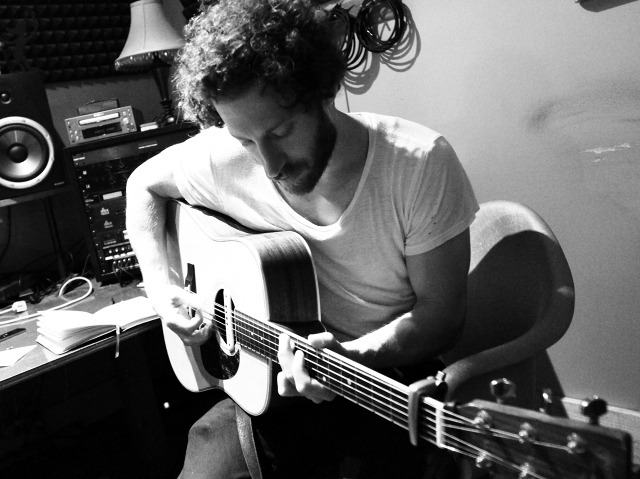
Matt Cranstoun’s powerful vocals make the listener take notice. Set to perform Saturday night at Brooklyn’s The Rock Shop, his show will include three gospel singers and a full band.
With so many showcases during CMJ Music Marathon, Cranstoun advises music fans to support independent artists.
“Everyone should support independent music and art. Go to CMJ. See 10 bands perform. If you don’t like one, walk out, you have the option to do that,” he said. “That’s the beauty of CMJ, there’s so much going on. You can find 10 shows that you should enjoy.”
Cranstoun began his music career at eight-years-old behind his father’s drum set. Once high school came around he joined numerous bands and soon afterward decided to take the solo route and moved to New York.
“I didn’t know what to expect so I came up here and started the real songwriter thing where you play by yourself. That was a whole new vibe for me and that’s what I’ve been doing ever since,” he said.
For my complete writeup, visit CBS. Matt performs tonight at 10 p.m. at The Rock Shop in Brooklyn.
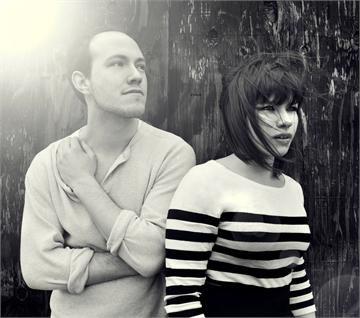
For Brooklyn-based Savoir Adore, what began as a 48-hour challenge between two friends soon morphed into a band.
A band that’s scheduled to play 8 different showcases at the CMJ fest this weekend.
“Deidre [Muro] and I were both solo artists in New York. We were frustrated with our current situations so we said, ‘Why don’t we try to collaborate over the weekend? See what happens,’” says Paul Hammer.
Over the course of that weekend Hammer and Muro decided to record an EP and gave themselves rules, which included no acoustic guitar.
“That EP formed the band. It was never intended to be a band; it was just a fun recording project that ended up getting passed around,” Hammer said. “We were so excited at what we created that we kept doing it.”