Sister Hazel will release their second of four EPs on Friday (Sept. 7). Titled Wind, the seven-track EP is part of the compilation series Elements.
One of the standout songs on the project is a soaring ballad called “In Two.” Written by Sister Hazel guitarist Ryan Newell and Todd Wright, Newell tells the story behind the song that he wrote for his wife on their wedding day.
“‘In Two’ is a very special song for me,” he explains. “I co-wrote it with Todd Wright, who lives up in Virginia where I live. It’s a love song. It was written for my wife. Todd actually played it in my wedding. The song is really dear to me because of that. I never really thought it was going to make a record. I thought it was just gonna be for that moment.”
Newell says as he and the band were picking out songs for their EP, it seemed like the perfect opportunity to feature “In Two” on the project. While his bandmates had forgotten about the song, when he played it for them they all agreed that it should be included on the release.
The delicate three-minute track features Andrew Copeland on vocals with backup harmonies from Wright’s daughter. An obvious choice for a wedding song, “In Two” strikes a chord. “I’ll never let you go / No matter what darkness comes in / I will shelter you / Nothin’s breaking us in two / Hold onto me, I’ll hold onto you,” he sings on the chorus.
“Drew sang it. He sang a beautiful version of it and it came out great,” Newell continues. “It doesn’t have too much production on it. We wanted to keep it as simple as possible. There’s a really cool string arrangement and there’s some baritone acoustic on it. It’s basically a vocal-driven song and it makes my wife very, very happy.”
“In Two” will be available on Sept. 7 as part of Sister Hazel’s new EP, Wind.
Mary Bragg grew up surrounded by music at her home in Georgia. Her father is a musician and choir director at her hometown church, so she and her family spent Sunday mornings singing together. While she credits church for her musical education, she also has vivid memories singing along to the radio and trying to harmonize Alabama songs as a youngster. It wasn’t until her first trip to Nashville following high school graduation that Mary was introduced to Americana music. A colleague at an internship handed her a Patty Griffin album and soon she delved into the works of other artists like Emmylou Harris, Townes Van Zandt and Lucinda Williams. After 10 years living in New York City and navigating the music scene there, Mary moved to Nashville and will release her latest project, Lucky Strike, on Friday, May 5. Her fourth full-length project, Lucky Strike, is her first album recorded in Music City.
Navigating Nashville
“When I first came to Nashville, I just wanted to write great songs. I did continue playing shows and toured, but I wasn’t sure if I was going to be able to make a career as an artist work. I’d go to shows all the time and it’s hard not to be overwhelmed by the amount of talent here. What I’ve learned from writing every day was that writing is just as fulfilling to me as playing shows and so I let that temporarily dictate how I directed my time. I continued writing every day, not thinking about touring as much, and really not thinking about making records. It was Jim [Reilley], my co-producer [who said], ‘Stop it. It doesn’t have to be this or that. You are great and you need to make this record.’”
The Big Apple
“As much as I loved living in New York City for so long, I did feel like an afterthought to the city, because really everything is an afterthought to the city. [The song] ‘Lucky Strike’ is how I feel about my career and my struggle because it’s about believing in something despite not being dealt the hand that you wanted to have been dealt. Somehow you’re still believing that it is possible, that it can happen, that you can find some semblance of success as you go along. It’s not that you’re suddenly successful, it’s that your definition of success is changing. I feel like my current measure of success is unrelated to what the outward impression of success appears like.”
Honest Writing
“In pinpointing sadness, which can often feel isolating, we’re telling that listener out there, ‘Hey, you’re not alone. You’re not the only person who’s felt invisible in a sea of 8 million people in New York City. You’re not the only person who’s lost a parent.’ That’s the beauty of music—that people can feel comforted by hearing someone else’s pain, which might be much like their own. Every now and then, somebody’s listening close enough where they’re like, ‘Oh, man. That really got me just then,’ and that’s the moment that I’m always looking for.”
A photo posted by Annie Reuter (@yousingiwrite) on
Kip Moore is learning to take life one step at a time. The singer/songwriter has been moving full speed ahead since the release of his debut album Up All Night in 2012 with little to no time off. In late 2016, he announced he’d be taking a much needed break from the road. This doesn’t mean he’ll stop releasing new music though. In fact, it’s quite the opposite as his new single “More Girls Like You” was released on Feb. 10.
Moore co-wrote the soaring power ballad with Steven Olsen, Josh Miller and David Garcia. The radio-friendly track details how he’s been “living like a wild ol’ mustang out in Montana fields” before he meets the lady of his affections. Now, he’s switching his lifestyle and thinking about settling down.
“So God made girls like you make guys like me / Wanna reach for the brightest star, set it on a ring / Put it on your hand, grab a piece of land / And raise a few / More girls like you,” he sings in the chorus.
The song came to fruition when Moore began discussing how crazy his life has become since moving from South Georgia to Nashville more than 10 years ago. Since his artist career has taken off he’s seen much of the world, and throughout his many travels he has noticed one constant theme: the joy a family brings people, no matter the ethnicity.
“Watching a man with his kids, and especially when they have a little girl, if you watch that complete sense of awe they have for that kid, I paid attention,” he tells me over the phone with a slight Southern drawl. “I’ve seen all different walks of life with that.”
While Moore admits that he has never eagerly awaited fatherhood, he is slowly becoming more open to the idea of having his own family one day.
“I’ve always felt that chapter would be fun, but I’ve just never chased after it,” he says, pausing. “For the first time in my life, from all my travels and everything that I’ve been doing, I look forward to that chapter. I think it’ll be a blast teaching my little girl how to surf, or my kid to play basketball, or whatever it is, hanging out and living that life.”
The song is a romantic one, in that it details how strongly the main character feels about his significant other.
“He thinks that she’s so incredible that hopefully when we do have kids they turn out just like you,” Moore explains. “I look forward to being so crazy about somebody that you want to have kids that turn out like them.”
“More Girls Like You” is the lead single off Moore’s upcoming project. He wrote the song four months ago and says he felt like it was a good way to start the flow of his third album. While he’s tight-lipped about the release, he revealed that he has produced most of the record by himself.
Songwriting Session is a column that goes behind-the-scenes with artists and songwriters. Each Sunday, a new songwriter will share their journey and provide lessons they’ve learned along the way. This week, Emma White shares what she has learned as a songwriter.
Emma White was born into a musical family as both her mother and grandmother were singers and songwriters. In fact, Emma was named after Emmylou Harris while her siblings are named after a James Taylor reference. So, it’s safe to say that music has been woven into her life from an early age. Over coffee at Nashville’s Portland Brew, White recalls her music filled childhood fondly.
“We would have hootenannies all the time. My family got together and played and sang,” she says with a smile. “I was into pop music at the time. My family was always singing John Prine and Patty Griffin. They exposed me to something I might not have chosen on my own but it was always a part of me.”
White loved pop and R&B music while her family preferred country. Her latest EP blends all three genres and she credits her time studying at Berklee College of Music in Boston for helping her evolve as a songwriter.
The singer/songwriter wrote her first song as a teenager and began shopping her demos around at the age of 16. She’d often perform Lauryn Hill songs at talent shows in Maryland with the dream of being a singer. However, it wasn’t until she heard a Clive Davis interview where he stressed the importance of being able to write songs that she realized she should focus more on songwriting.
After living in Boston and New York, White made her way to Nashville although she admits she never thought she’d wind up in Music City.
“I was a New York girl, but every opportunity and every door that ever opened ended up being down here,” she says.
The first song she released professionally was called “His Eyes” and she first thought it was an R&B track. People advised her to submit it to a local Maryland radio station where it won an undiscovered talent contest with their country station. Suddenly, she realized she was actually writing country music.
White’s latest EP released on Friday (Feb. 3), merges her passions for songwriting, country, pop and hip-hop. While the songs include classic country songwriting the production hints at pop and R&B. This is exemplified in the standout song “My Ex,” co-written with Jesse Lee (Kelsea Ballerini’s “Peter Pan”).
“We kept that storytelling aspect of it, and then when I worked with my producers we really wanted it to be a hybrid of R&B and country,” she says of the song “My Ex.”
White’s new single “Not That Into You” is more pop based and sounds like a song that would fit in perfectly on radio in between Taylor Swift and Kelly Clarkson. She says it’s her favorite song she’s ever written and was inspired after a trip to LA. While attending an industry event a man there was making strong advances towards her. Taken aback, White turned the off-putting experience into a song that embodies a humorous portrayal of a girl pushing a guy away.
“I had seen the movie He’s Just Not That Into You and on my Facebook there are always ads: ‘Why are you single? This is why. Buy my guide.’ I thought in a theatrical way about [writing] it. I wanted to take on a gutsier character,” she explains. “I wanted it to be something a little bit shocking that you might not hear a female say. While I was writing it I sent it to my best friend who lives in New York. She had been on a million Tinder and Bumble dates and she was like, ‘I love this song. I totally get it.’ She wrote, ‘I’m not playing games or hard to get.’ So, I put it in the song and she’s the co-writer on this song.”
White’s new EP includes seven songs, all of which she co-produced, and spans several genres. She says this was intentional as she wanted each song to stand firmly on its own.
“For this album, I wanted to make every song stand on its own sonically. It definitely has an overall pop/country feel,” she shares. “Some songs lean more pop/rock and others have an urban thing going on. I really wanted to create a fingerprint for each song. There are certain melodies you’ll hear in certain songs and different textures in each song. It’s a blend of a lot of things.”
It has been a long musical journey for White, who now lives in Nashville full-time. She says if she could have told herself anything before taking the leap into music it would be to buckle up because there are a lot of highs and lows. She adds that having patience is important and stresses at being open to collaboration.
“I think co-writing has really expanded my sound and songwriting,” she admits. “You always learn from other people in the room. We can do so much more when we’re working together.”
She adds that she’s constantly trying to find a balance between success as a songwriter and simply doing it because she loves to write.
“You never want to have to compromise certain things. I think the biggest thing is staying true to what you think is good,” she says. “Being a songwriter is often a struggle but it’s all I’ve ever wanted to do. Performing, singing and music is woven into who I am. It’s always felt like it’s what I was meant to do. It chose me, I didn’t choose it.”
For more on Emma White visit her website and to purchase her music, click here. Catch Emma live in Nashville on Monday evening (Feb. 6) for Whiskey Jam at Winners Bar & Grill.
A photo posted by Annie Reuter (@yousingiwrite) on
I’ve been lucky to have been able to chat with some of country music’s most respected artists over the years. Earlier this week, I sat down for an interview with Trace Adkins who gave me an early preview of his upcoming 12th studio album Something’s Going On, which is due for release on March 31. It was a full circle moment for me as five years ago I ran into him on the street in New York City, before I ever dreamed of moving to Nashville. Below is an excerpt of that interview:
Something’s Going On boasts songs written by Tyler Farr, Craig Campbell, Old Dominion’s Trevor Rosen and Shane McAnally, among others. One of the tracks, “Whippoorwills and Freight Trains,” written by Phil O’Donnell, Jeff Middleton and Brandon Kinney, is a song Trace cites as the most honest on the album.
“It’s just a lonely . . . ,” he admits with a pause. “The last few years have been personally pretty difficult and I think ‘Whippoorwills and Freight Trains’ really speaks to where my emotions and everything have been for the last few years.”
It’s also a song that Trace confesses was difficult to sing while in the studio, along with another track called “If Only You Were Lonely,” which was written by Jon Coleman and Troy Johnson.
“I really remember recording [“If Only You Were Lonely”],” Trace says. “The day I was in the studio singing that one, something happened in the booth and I had to stop for a while. I couldn’t maintain my composure, it tore me up. It hurts when it happens but then you go, ‘Wow. Thank you, God, for moving me like that when I was singing a song.’”
The centerpiece of Something’s Going On is the album’s first single, “Watered Down.” Written by Shane McAnally, Trevor Rosen and Matt Jenkins, it’s a song that Trace says summarizes his current state of mind.
“Lyrically, from the very first line it really encapsulates and summarizes where I find myself, it seems, at this point in my life. I’ve mellowed out a little bit hopefully and calmed down a little bit, trying to stay out of the news,” he says with a laugh. “Everything about the song just fit exactly where I seem to be in my life right now.”
Elenowen throw logic out the window on their sophomore album, For the Taking, released earlier this year. The husband and wife duo, made up of singer/songwriters Josh and Nicole Johnson, gained exposure on the first season of NBC’s The Voice and have continued to develop that recognition with their music being featured on TV shows like Nashville, Pretty Little Liars and Army Wives.
That’s not to say there weren’t struggles along the way. Josh and Nicole recall early hurdles as they were getting national attention on The Voice. During that time, they were still living in Nicole’s parent’s basement, something they say inspired much of the autobiographical record.
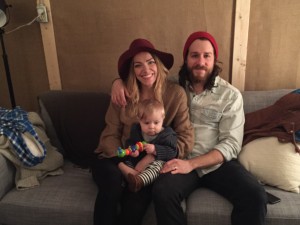
“After the exposure from The Voice, touring and getting more buzz around us than we ever had, that aspect of our career was great but at the same time we were still living in her parent’s basement and we had lived there for five-and-a-half years,” Josh recalls while sitting in the basement of his publicist’s office on Music Row beside Nicole and their son Nolan. “We were at the stage of our marriage where we were married almost six years at the time and Nicole’s biggest piece of her identity was to be a mom and she was missing it.”
Nicole and Josh Johnson with their son, Nolan, in Nashville
He adds that For the Taking captures the struggle of the couple trying to figure out how to keep their career momentum going but also the desire of starting a family. Much of the album was written in that basement apartment as they looked out the basement window dreaming of getting out.
“I would say there’s a decent amount of desperation and hope in the record. We landed on the title For the Taking near the end of that season where we did actually get pregnant and we did find ourselves a house,” he says with a smile. “It was a massive step of faith of, ‘This is where we feel we need to be going so let’s start and take it in our own hands.'”
Nicole chimes in, explaining that previously they had spent so much time waiting to make decisions on what felt logical instead of what made them happy.
“We finally tossed that [logic] to the wind and started making decisions based on what we wanted out of life,” she says. “It still makes things extremely difficult because logic is there for a reason. Logic makes things sometimes easier.”
But, as heard on For the Taking, logic isn’t always the best route. Josh and Nicole agree that “One By One,” a song of theirs featured on Nashville, is one of the most honest songs on the album. With Nicole singing, “Don’t walk away/Don’t walk away from me baby/Even though I’m going to treat you so badly sometimes,” Josh says they don’t sugarcoat the struggles they’re going through. Other songs, like “Desert Days,” bring about comparisons to Fleetwood Mac, a welcomed compliment for the duo.
“If we remind people of Fleetwood Mac when they listen to us, alright! I don’t know what more I want as far as people to get out of it,” Josh says, beaming. “For me, doing music, that was the only thing I was really passionate about when I first started. It was the first thing I grabbed onto. When we started doing it as a duo it had a little more momentum than anything I had done alone. It got me really excited about it. This was the best thing we’ve got going for us, let’s chase after it. It was the most viable option to keep pursuing. I was steering the ship.”
While Nicole admits some days were tougher than others, helping fulfill Josh’s dream was something she never hesitated to do until it started to threaten her own dream.
“Even in the hardest days that I wanted to quit, there was always that thing in the back of my mind where I didn’t want to wonder my whole life, ‘What if?’ That’s what kept me going,” she says. “Doing music is Josh’s biggest dream and I wanted to help him in that. Because we’re a duo it’s not like I can just be like, ‘All right, I’m going to check out and do it on your own.’ In a way I was stuck in it, but not in a resentful way.”
She adds: “When it was a matter of me not being able to have kids because of it, that’s when I was starting to be like, ‘OK, I’m giving up all of my dreams for this thing that I don’t even know what’s happening.’ But now that we’re trying to figure out how to do both it’s more challenging but it’s also more rewarding at the same time. Just seeing it through, taking it a day at a time. That’s all you can do.”
Now they’re out of the basement and continue their musical journey by touring to support their latest release For the Taking and raising their one-year-old son.
“We’re in a little house that’s not much but it feels like the Taj Mahal compared to the basement,” Josh laughs. “We got this little guy chewing on everything, crawling on everything.”
Songwriting Session is a new weekly column that goes behind-the-scenes with artists and songwriters. Each Sunday, a new songwriter will share their journey and provide lessons they’ve learned along the way. This week, songwriter Westin Davis shares what he has learned as a songwriter.
Last week, I kicked off my songwriting column with Kip Moore. During our chat about songwriting he raved about his frequent collaborator, Westin Davis, who shares four co-writes on Kip’s new album Wild Ones including current single “I’m To Blame.”
“Me and Westin are thick as thieves, and he keeps my sanity a lot of times,” Kip asserts. “There’s nobody I’d rather have a hit with than Westin.”
He adds: “Westin and I, we’ve been scratching and clawing for a long time. We met when we both first moved to town 10 or 11 years ago, and we were writing together from sun up to sun down. He’d crash at my house, and then we’d get up and do it all over again, and we’d go to work and come back and meet that night.”
All that hard work is now paying off as Kip and Westin’s song “I’m To Blame” is now in the Top 20 on the country charts. “We had dreams of having songs on the radio together, and now we have them. To be able to have a big hit with him would mean more to me than having a hit by myself, that’s for sure.”
Westin moved from Florida to Nashville to pursue a career in songwriting but the journey wasn’t easy. He moved back to Florida after a short time in Nashville, but Music City called him back. He now has a publishing deal with Magic Mustang Music and in addition to cuts by Kip Moore, he has written tracks for Thompson Square, A Thousand Horses, Hinder and many others.
In a candid chat, Westin opens up about his songwriting journey (it started in the 4th grade), why he doesn’t hold back in his songwriting and much more.
“I carry all of my yesterdays into my co-writes,” Westin asserts. “I carry my hometown, I carry everything bad that ever happened to me. So when I’m writing, I’m giving everything I have just like an entertainer would if he was performing for an audience.”
He adds: “You never know where writing will take you. The beautiful thing about writing is it gives you freedom and a sense of pride.”
Take me back to the beginning. Do you remember the first song you wrote?
I kind of stumbled into writing. I lived in a pretty rough area when I was a younger kid. In 4th grade they gave all the 4th grade and 5th grade students something to do: go home and write a song to stop the violence in the area and the drugs being sold at the school and the killings. Before they even finished giving us that task, the song was already wrote. I ended up winning. I would like to say it started there. I always had a knack for it I guess. I didn’t think about it till years later.
I left writing and focused on sports. Played basketball in college. It wasn’t until I was going through more things in life and putting a pen to paper and words to melody that I remembered the first song I wrote. “Oh my gosh. Am I supposed to be doing this?” One thing led to another. I started writing more and more only to find out that the songs I were writing were terrible. I did have something. I had that natural way with melody and words that I would say an inner city black dude would have. But I didn’t start learning the craft until I rolled my sleeves up. I said, “You know what? I’m going to put as much work into this as anything else. I’m going to learn how to write, the proper way to write. I’m going to learn, not only songwriters but people who write books, Hemingway, Robert Frost. People like that.” That’s when it became almost an addiction. I was about 23.
Why did you decide to move to Nashville?
I moved to Nashville and luckily became friends with a guy who was very successful in the business. He took me under his wing and told me the do’s and the don’ts. I never would want to get the cart before the horse. I didn’t want to start knocking on doors on Music Row until I was absolutely ready. I’m my toughest critic. I’m glad I had people open those for me or I’d probably be still sitting on the sideline.
I moved back home to Florida because I missed the beach and after about a year I flew back to Nashville and said, “Look, I’ve been writing these songs by myself.” And he said, “Shit. You’ve been writing by yourself?” And I said yeah. I started writing with my buddy Kip [Moore] and we just had this crazy dream that we were going to write songs and he would sing them but we knew we could make it a reality as well.
Do you prefer co-writes or writing by yourself?
I like writing alone but I also like co-writing as well. I’ve done it long enough now to know my circle who I mesh really well with and vibe with. It’s fun to go into a room with another person who you trust and they trust you and you walk out with the best finished product.
What’s your songwriting process like? Do the lyrics or melody come first for you?
It’s different every time. I’ve written so many songs. There’s a number that started with just me picking up the guitar, there’s been a number of them with me driving down the road and thinking about my life. For example, “I Killed a Man” and thinking how I killed that person. And then thinking, how would that go? The only way that I know is to be totally honest. I draw inspiration from everything. Billboard signs, somebody saying something to you. I draw inspiration from so many things. You may say something on the phone and I may go, “Oh what was that?”
I’ve sat in place–back home especially–looked at somebody and not know anything about them, their name, whatever, but could tell a lot about them by the clothes they had on. I created a character and wrote a story about them not even knowing anything about them.
Do you have to be in a certain mindset to write a song?
I refuse to fail. I’m very, very…I don’t know. I wrote with a guy the other day and my publisher called me and said, “You killed it. The guy was a little intimidated by you. He said you were pretty intense.” And I said, “I’m not fuckin’ around. This is business to me. I’m not going to write just a bunch of cliché stuff.”
I carry all of my yesterdays into my co-writes. I carry my hometown, I carry everything bad that ever happened to me. So when I’m writing, I’m giving everything I have just like an entertainer would if he was performing for an audience. It used to be, before I quit doing things, even if I was writing a good song, a happy song whatever, I needed to get up, I’d take a little sip of cough syrup, do other extracurricular activities and light up cigarettes. I had to be that guy. Now I learned how to not do that. There still is that thing deep within me where the only motivation I need is my past. I take what I do very seriously. Kip is a prime example of he takes what he does very seriously and that connects with people and my writing is the same way. It’s not fabricated.
Songwriting is often described as therapy. Is it difficult to open up in a co-write?
I think writing in general is therapy. Somebody told me recently, they said, “Man, I can hear you in every song that someone else sings or every song that I hear you play. I can hear your life story in it.” I’ve been very fortunate to have very rainy days and sunny days. I’ve been very fortunate to live in black neighborhoods, to be poor, to be around crack dealers and drug dealers. To drive to a family member who lives 30 miles down the road and has more money than he knows what to deal with and to see that side of life. And also be in love and out of love and heartbroke and losing somebody.
I know that might sound crazy. It wasn’t until I started writing, that I looked back and actually thanked God for hard times because I can draw from a deeper well than most people. It’s cool to write about, “I’ve had a hard life, I’ve done this” when most people’s yesterdays are a walk through Candyland compared to mine. You can tell it’s all fabricated bullshit which comes with them but with me it’s real.
What’s the most honest song you’ve written?
I have no idea. They are all pretty honest. Even in songs I haven’t had cut yet I have lyrics that are pretty honest to me that I have tattooed on my body. I wrote a song called “I Killed a Man.” Killing the old Westin. There’s so many.
The big man has blessed me. I can’t complain. There’s always somebody way worse than me. I have put several buddies in the ground and seen them laid to rest from a community that is constantly going through uphill battles. I’m just thankful to still be alive and still be here and doing what I do. I know at any minute it can be all over. I’m just very thankful.
Are you ever afraid to reveal too much in a song?
No. I’ve learned with anything…I’m a very, very vocal person. What you see is what you get. I’m never trying to impress everybody. I’ve always respected the people that who they are is who they are. I can smell out a poser from a mile away. I respect people who are not gonna be nobody else but them. I’m not trying to be nobody but me. Even later in life, I’ve battled demons with addiction and drugs. Most people, they try to hide from that. To me, it’s therapeutic to get it out there. This is who I am. I’m a long way from perfect but I’m trying.
I’m not trying to knock anybody and I would never do that. When you take somebody from my side of the tracks it’s comical when someone is pretending to be a character that they’re not. We can tell right away. It’s the people that have been through the rain that I respect. They learn more, they look at life differently. I just love those people.
One of the songs you wrote with Kip Moore is “Lipstick,” which is so catchy. Do you have any tips on writing catchy choruses?
To be honest, I don’t even know. Whatever melody hits and it feels natural to go with I go with. I’m not one to think too much about melodies because they come so easily at times. I don’t know if that is because of my black past where I can rap and flow, I don’t know. When a melody does hit and it seems to stick the verses just write. Obviously, married to the right words you’ve got a good song and a hit song.
Do you need to play an instrument in order to write songs?
No. I told a guy one time, [he asked] “How’d you come up with that line?” and I said, “Dude to be honest with you I’ve considered myself to do the ebb and flow, had the words and melody in me.” To come up with those lines that stop you and make you feel something it proves you’re on top of your craft or your art. It’s just like if you went to the gym everyday and worked out your biceps every day, they’re gonna grow. If you exercise your brain it’s going to grow. If you want to be the best writer, read books. Find out words. Follow the people you look up to. See how they said something and, “Oh my gosh, they said that in a different way. How could I do that?” It’s like anything.
Guys in prison who are on a death sentence, when they went in they didn’t know they were artists. Then all of a sudden they find out they can paint or draw. They’re locked in a jail cell, they’re locked in their own mind and talent. You discover that and you work on that and get better and better and better.
Is there a song that means more to you now then when you first wrote it?
There’s a few. I have the ability to tap in. I wrote with somebody recently who I asked them straight up, “What are you going through right now?” He said, “Man, I just ran into an ex two days ago and I was just stopped in my tracks. She didn’t see me.” I could see his pain and I know that pain. Luckily I had been in his shoes before, even though I’m happier now than I have ever been, I’m more in love, I knew what it was like to feel that heartbreak and to see that somebody.
I think that’s maybe a gift as well. To be able to get that low. I thrive on misery anyway. To get that low and to feel that pain. I wrote the first line of the chorus and he looked at me. A lot of that is from working on my craft but also being addicted to being sad. I would say that sometimes I’m the happiest when I’m sad.
Is that because you know you’re going to write a song from that?
I’ve pulled all night therapy sessions on myself asking that same question.
How do you know when a song is done?
When I write alone I’m really, really hard on myself where I’ll go back and make changes and make changes that I’ll make it so damn good that it will be horrible and I should have just kept it the way it was. If I’m co-writing with someone I’m not hard on myself at all. I’m really hard on the other person. I’ve been doing this professionally now for 5-6 years. Writing every day you find your circle of people that you connect really well with. And then also they’re seasoned as well. I still have days when I go into a room with a newbie that comes into town and I remember being that newbie and thank God for people like Dan Couch when I first got to town, he showed me right from wrong. He’ll tell you that I was great. But me, knowing my own limitations, I was good at making things rhyme but he showed me the correct way to write a song.
What’s the best advice on songwriting you’ve ever received?
I’ve gotten some great advice from some old-timers. If I’m gonna do something I’ve gotta be the best at it. I can’t fake my way through it. If I’m going to go into a write with another writer, say someone who has 10 No. 1’s, I want them to know that I’m there pulling my weight, too. And hell, I have. I’ve proved it several times. If I ever came across somebody and I have, who ask what can I do to be a good writer, the best writer, I would say, “Look, man. Study writing. Don’t just study songwriting. Study writing period. Robert Frost, Ernest Hemingway, go all over the place.” Study lyrical geniuses too.
One guy said, “Florida Georgia Line aren’t saying that.” I get it, but you can do that. When somebody sits down with you and they want to be able to write a song you wouldn’t be able to deliver. Study the writing. I’m not chasing the radio. Yeah, I need a little bit of money to put food on the table but I’m not going to sellout either. I take what I do very seriously. Take yourself seriously, don’t give a shit what everybody else is doing. Run your road, study your craft. Work on your craft and your art. Study the best writers. Read. Keep putting one foot in front of the other.
You never know where writing will take you. The beautiful thing about writing is it gives you freedom and a sense of pride. A lot of people can’t do what you do. It’s a cool thing. When you can be on top of your craft where it just comes naturally and you can connect with people, then you’ve done it.
Songwriting Session is a new weekly column that goes behind-the-scenes with artists and songwriters. Each Sunday, a new songwriter will share their journey and provide lessons they’ve learned along the way. This week, country singer-songwriter Kip Moore shares what he has learned as a songwriter.
Songwriting is a serious trade. It’s not for the faint of heart. In fact, as Kip Moore once told me, he doesn’t encourage people to take the path of songwriting as a career.
I have to preface this by saying that Kip Moore is my all-time favorite country songwriter. While I’ve interviewed him four times now, my most vivid chat happened last November backstage at New Jersey’s Starland Ballroom, a venue I grew up seeing shows at. It also consisted of him telling me that songwriting isn’t for everyone. It’s all or nothing he basically told me. It was a bit of a slap in the face, but something I’ve come to realize I desperately needed to hear.
You see, before that interview I had dabbled in songwriting. I took an online class over the summer that taught me the basics of songwriting and wrote my first song. But nothing quite prepared me for his honesty. As he told me, though, songwriting isn’t something you necessarily can learn but something you have to pursue with every ounce inside of you.
“I always tell people to chase their passion,” he tells me. “My advice to songwriters is, unless you’re truly serious about it, and it’s all you can think about doing, it’s all that’s in your heart, leave it alone. Trying to do it for a career, it has to be all or nothing. It’s gotta drive everything in you.”
Kip is a passionate guy. If you’ve been to one of his shows you can see that unyielding energy he leaves on the stage every single night. In person, he’s quite serious and even a bit intense. When I mention this to him he laughs and says he can be playful, too.
In an interview with Kip, you have to know your stuff. He can read right through you if you don’t. He says he’s a no BS type of guy and that couldn’t be a truer statement. Lucky for me, I have lived with his excellent debut album Up All Night for three years now so I’m pretty well researched before our big chat on songwriting. Possibly a little nervous too.
A photo posted by Annie Reuter (@yousingiwrite) on
At first, he admits that he truly doesn’t know where to start when I ask him how to write a song. And then there’s a long pause. Right away I’m thinking maybe this wasn’t a good topic to discuss. But before I have a chance to ask another question he begins to tell me about his journey as a songwriter. He explains that he used to sit down for years and years and make himself write two songs every day.
“I would force myself to write, write, write,” he admits. “Now it’s more of an organic process where I almost always come up with the guitar groove or melody in my head and then I sing it into a recorder and then I live with it for days in my bunk and let it soak into my brain and what I feel like it’s supposed to be saying.”
Like many songwriters, he said the process varies every time. Sometimes he has an idea for a song, sometimes he has a title and other times he has a groove. While he says that you can teach the craft of songwriting, ultimately songwriting has to be in your soul to succeed.
I explain to him that what’s most difficult for me is writing a catchy chorus. I want to create something people want to sing along to–like a big Kelly Clarkson chorus–but often struggle getting there. Then he gets honest, simply saying, “You gotta fuckin’ study.”
He elaborates on that point. “You’ve got to sit down and you have to listen over and over for hours and hours of laying there at night and trying, understanding who your greats are, who your favorites are and paying attention to how they did it. It will soak in your mind and teach you how it’s done. That’s what I did. I studied the greats and the guys that I loved, and that’s how I learned how to write songs.”
Some writers are lucky enough to find mentors the moment they step foot in Nashville, but Kip is quick to admit that was not the case for him. In fact, he couldn’t get in the door to save his life. So, instead he had to teach himself. He did this by listening to the people he loved. By the time he got into the room with guys like his producer and songwriter Brett James, he was ready to go and just paid attention.
So why is he hesitant to urge others to follow his path into a songwriting career? He admits that things are even more difficult today than when he first started and often he doesn’t know what to say to songwriters.
“I don’t encourage people to take this path. It’s fucking hard and the window is getting smaller and smaller and the publishing companies are going away every day. I don’t know if I want to encourage someone to chase something that seems so out of reach all the time.”
But if songwriting is truly the career path you want to pursue? He says to study your butt off like he did.
“I can remember how discouraging the whole process was for me and how much it beat me up to where I just don’t know how to tell people. It was such a tough road. It was all I wanted to do, that’s what kept me going.”
Kip Moore’s sophomore album ‘Wild Ones’ will be released August 21. Pre-order it on his Website. His single, “I’m To Blame” is out now.
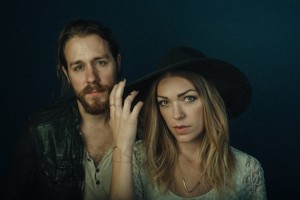
“The first writing session that we had was the easiest and most comfortable co-write you could ask for,” Trent Dabbs told me on a warm day in February in Nashville sitting inside his publicist’s office on Music Row. He, of course, was talking about his Sugar & the Hi-Lows bandmate Amy Stroup.
Dabbs, a well-known solo artist and producer, formed Sugar and the Hi-Lows with Stroup in 2012 after several productive co-writes where he recalls the songs were practically writing themselves.
“The more that Amy and I would write, the more inspired we felt, the more the songs were taking shape and getting better,” he adds. “I personally never felt like we plateaued as writers. We were only gaining momentum.”
Meanwhile, Stroup remembers her first co-write with Dabbs as being one of her favorite co-writes ever. One of the songs they wrote, “This Can’t Be the Last Time” appeared on their self-titled debut in 2012 after both artists decided it was time to start a band together.
While they’ve been together for a few years now, Sugar & the Hi-Lows’s sophomore album High Roller marks a new journey. The duo have further cemented their reputation as a must-see live act and dates opening for Kacey Musgraves continue to get their music out to a much bigger audience. The title track they wrote with Barry Dean, who Dabbs previously wrote Ingrid Michaelson’s “Girls Chase Boys” with, which also happened to be the first co-write for the duo.
“When he wrote with us, I could just feel that he was bringing out any shamelessness or quirks or anything that we had that we were hesitant to bring,” Dabbs admits. “I think that’s what makes a cool writer. We wanted to do a song that’s a straight up dance move that you can’t help but move around to. We played it at the Grand Ole Opry and no one was in their seat. There were people in the aisles. I felt like I was in The Blues Brothers.”
Stroup is quick to add that while writing “High Roller” she wanted to create a specific dance for the song inspired by her bandmates’ fancy footwork which is often highlighted at their live shows.
“I remember thinking, there are dances in the ‘60s, there are all these titles of songs, the shimmy and some of the ones we use in the second verse that we call out. ‘The Macarena’ was a huge song in the ‘90s. We were like, ‘Let’s try a modern day one that fits Sugar and the Hi-Lows.’”
So what exactly does that dance look like? The band show off some of their moves in the music video for the song above.
Highlights on the album include “Bees Love the Trees,” a title that Dabbs says was all Stroup’s idea. “I don’t know where in the world it came from,” he laughs, adding that it was a certain feeling they were chasing in their co-write.
“We were playfully calling out Music Row,” Stroup admits. “If you think about Johnny Cash style, if you remember, he released the Billboard article flicking off Music Row. There’s this badass sentiment, ‘We don’t need Music Row. Let’s be ourselves and see what happens,’” she says of the song.
While Stroup admits that they’re not flicking off Music Row per say, the song instead gives a nod to the rebels and artists who have forged their own path like Elvis Presley, Emmylou Harris, Jack White and Johnny Cash.
“There’s still something to offer when people seemingly don’t have all the attention of the corporate world looking on them. There’s still room for greatness coming out of these people time and time again,” she adds.
The album also includes “I Don’t Get High,” a song Dabbs says was an original way to tackle a love song, as well as “Right Time to Tell You” which is based around indecision. “If you listen to it, it feels like it has no finality but in the very last line it does,” Dabbs says. “It is about not wanting someone to leave, not letting them go. It’s a conversation I got from others.”
While Stroup admits that it’s scary to be so honest in co-writes, she says that writing with Dabbs allows her to say what she’s really feeling.
“There is some form of overcoming that, ‘Alright, this is how I feel and I’m just going to say it.’ Those are the songs that get me. I hope we can do that.”
Having frequently been compared to Carla Thomas and Otis Redding, it is this compliment that the duo don’t take lightly. In fact, Dabbs grew up listening to these classic singers and credits Redding and his father for influencing the band’s music.
“Listening to the classics like we did growing up and having a father say music isn’t good unless you can dance to it, helped us try to write songs that were more upbeat,” Dabbs said.
As for the comparisons to Redding and Thomas?
“You realize that you’re a ripple on a wave in an ocean and you’re just lucky to be in the ocean. I am thankful to be in the ocean and have influence on anyone,” he concludes.
Sugar & the Hi-Lows sophomore album High Roller is available now.
I first learned about 10 Out of Tenn seven years ago while researching for an interview with Matthew Perryman Jones, a Nashville-based singer-songwriter. Part of a collective of songwriters based in Tennessee, he told me of his decision to move from Atlanta to Nashville and how close-knit the songwriting community was in Nashville. I’d come to realize that years later after countless trips to Music City for work and fun, convincing myself more and more each time that it’s a city I need to live in.
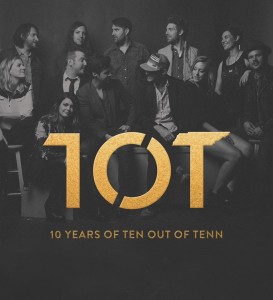
During my recent trip there for Country Radio Seminar, I spent some time with singer-songwriter-producer Trent Dabbs, the founder of the 10 Out of Tenn tour concept and compilation albums and Amy Stroup, also a songwriter and one-half of the duo with Dabbs, Sugar & the Hi-Lows. They told me all about how 10 Out of Tenn formed and this Friday, April 24 the songwriter’s collective celebrates 10 years together with a performance at Nashville’s Ryman Auditorium. You can purchase tickets here.
“It came about really when my wife and I were driving back from a road trip in Jackson, Mississippi and I was listening to all these different local albums and realized that all these people were so good and some of my favorites,” Trent explains. “They were all local so it morphed into the idea, ‘What if we put them all on a compilation and let everyone know that it’s not just gospel and country music here?’ I like to rate things out of 10 so I came up with the quirky name.”
He explains that during the first tour the idea of having everyone play on each other’s songs wasn’t completely dialed in and the tour included two bands and four solo artists. The next tour consisted of more solo artists and everyone played on one another’s songs. Trent admits that he didn’t have high expectations the first year and never imagined that 10 years later they’d be celebrating such a big milestone.
“I think what made the beauty of the whole concept work was not having high expectations,” he says with a laugh. “We were just excited to tour with people that we love. The camaraderie of those people in the community that was present the whole tour just made it that much more special.”
Amy Stroup is the newest member of the collective and recalls first seeing a Ten Out of Tenn show while she was in college.
“I remember seeing it and thinking, ‘Oh, wow there’s a different possibility in Nashville of how you can do music. It’s not just country or gospel. There’s a really unique independent movement,'” she recalls. “I was 100% inspired by it. Trent and I were co-writing, we started co-writing a couple years before I was a part of 10 out of Tenn so I was very familiar with Trent and Kristen and the work that they were doing for artists and trying to create a different genre for Nashville to be known for, a collective idea.”
Amy says Ten Out of Tenn gave many musicians, including herself, the ability to stay in Nashville and make music as well as collaborate and work on each other’s records.
“We were lucky that it was all natural relationships. I don’t think if you just cherry picked a bunch of artists that it would work, if at all,” Trent adds. “I think the sincerity of it made it what it was.”
Amy explains that there isn’t a Ten Out of Tenn tryout, and instead the artists collaborate rather organically, many having written together in the past or sang on each other’s records. “We’re already working with these people, we already love them. Why don’t we tour together? There’s enough of us already naturally working together and cheering each other on,” she says.
Matthew Perryman Jones shared the same beliefs seven years ago when I asked him how the Nashville music scene stands out from the rest of the country.
“You think of Nashville and you think of Music City. Most people just think of country music. When I first moved here, there was this really cool, underground group of artists and songwriters that were amazing and inspiring. This town, even in the last three years, has just beefed up its artist roster.
“People are moving here from other cities, even from New York and L.A. because the music scene definitely has more of a communal sense to it, people really support each other. In a way, I guess it’s different from other cities in that there’s definitely more of a concentration of artists here and the community is definitely really big and supportive. Not to say it doesn’t exist in other cities, I’m sure it does, but I think it’s a little more prevalent here. I think it’s helped me too, in a sense, because it’s a really inspiring city to live in.”
The Ten Out of Tenn show on April 24 will feature music from Andrew Belle, Butterfly Boucher, Trent Dabbs, Andy Davis, Katie Herzig, Tyler James, Matthew Perryman Jones, Jeremy Lister, Erin McCarley, K.S. Rhoads and Amy Stroup.